 Supriya Bhardwaj
 Valley of Flowers Trek Guide + Our June 2025 Experience | UNESCO World Heritage Site | Complete Trek Info, Stay Options & Family Trek with Traxplorers
A Himalayan Floral Paradise Like No Other
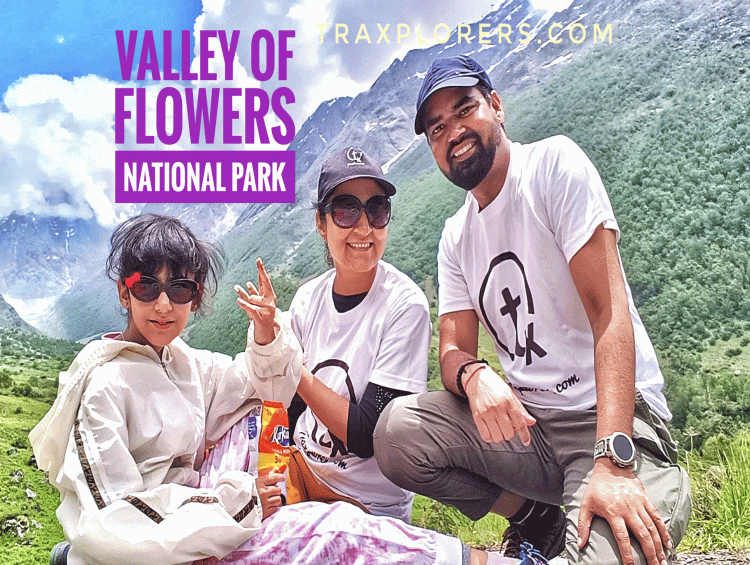
If the Hemkund Sahib Yatra fills your soul with spiritual peace, then the Valley of Flowers will fill your eyes with a wonder you’ll never forget. Located just a gentle trek away from Ghangharia, the Valley of Flowers National Park is a UNESCO World Heritage Site nestled in the Garhwal Himalayas. Blanketed in a stunning riot of wildflowers during the monsoon season, this valley is truly one of India’s most breathtaking natural treasures. And for us ‘Traxplorers’ trekking here the very next morning after completing the Hemkund Sahib Yatra made the experience even more magical.
Trek Overview
- Starting Point: Ghangharia (Base Village)
- Final Destination: Valley of Flowers National Park
- Trek Distance: ~4 km (one way) from Ghangharia
- Trek Duration: Half-day to full day (return same day)
- Trek Difficulty: Easy to Moderate
- Best Time to Visit: July to September (Peak bloom: mid-July to mid-August)
- Entry Fee: ₹200 per person (Indians) | ₹600 per person (Foreign nationals)
Altitude Profile – The Full Journey at a Glance
Before we dive in, here’s a look at the complete altitude profile of the trek from Rishikesh all the way up to Hemkund Sahib, with the Valley of Flowers sitting just below at 3,658 m. This chart gives you a clear sense of how the terrain builds gradually before it rises steeply in the final stretch.
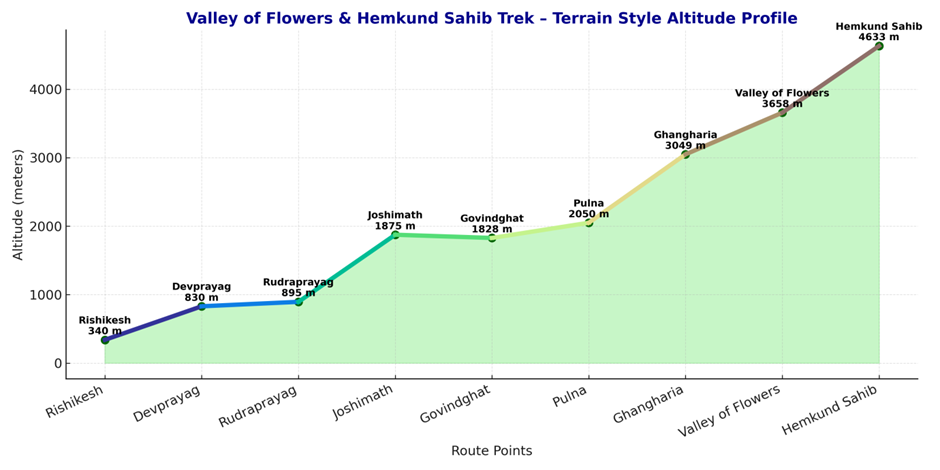
Starting at just 340 m in Rishikesh, the route climbs steadily through Devprayag, Rudraprayag, and Joshimath before the real ascent begins at Govindghat (1,828 m). From Pulna (2,050 m), the trail rises sharply to Ghangharia (3,049 m) your base for both treks. The Valley of Flowers sits at 3,658 m, while Hemkund Sahib towers above at 4,633 m. The contrast in those final two legs tells you everything about what each day demands and rewards.
About the Valley of Flowers National Park
The Valley of Flowers spans roughly 87.5 sq km and sits at an altitude of 3,352 to 3,658 meters (11,000–12,000 ft). It was declared a National Park in 1980 and later inscribed as a UNESCO World Heritage Site as part of the Nanda Devi Biosphere Reserve.
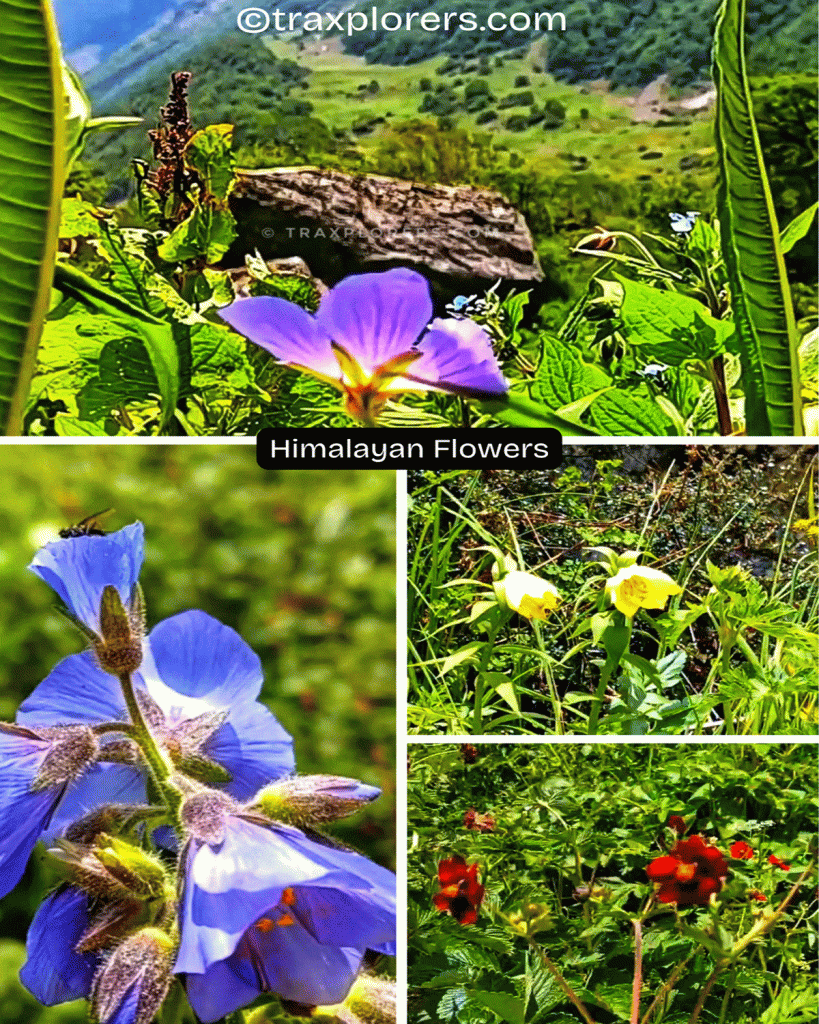
The valley is home to over 500 species of wildflowers, including Brahmakamal, Blue Poppy, Cobra Lily, Himalayan Balsam, Geranium, Primula, Potentilla, and many rare and endangered species. It is also a habitat for Snow Leopard, Asiatic Black Bear, Brown Bear, Red Fox, and several Himalayan birds.
How to Reach Valley of Flowers
Since Ghangharia is the base for both Hemkund Sahib and Valley of Flowers, if you’ve already completed the Hemkund trek, you’re already perfectly positioned!
- Ghangharia to Valley of Flowers Entry Gate: ~3.5–4 km trek
- Trek Time (One Way): 2–2.5 hours
- Route: Ghangharia → Forest Department Gate → Valley of Flowers
The trail begins right from Ghangharia market area and is a relatively gentle walk compared to the steep Hemkund Sahib climb, a welcome relief for your legs after Day 2’s effort!
Entry & Permits
- Entry tickets are purchased at the Forest Department Gate at the start of the valley (not in Ghangharia).
- The park is open from 7 AM to 5 PM (no overnight stay permitted inside).
- No guides are mandatory, but hiring a local guide is recommended for identification of flora and fauna.
Important: The park is closed from October to May due to heavy snowfall.
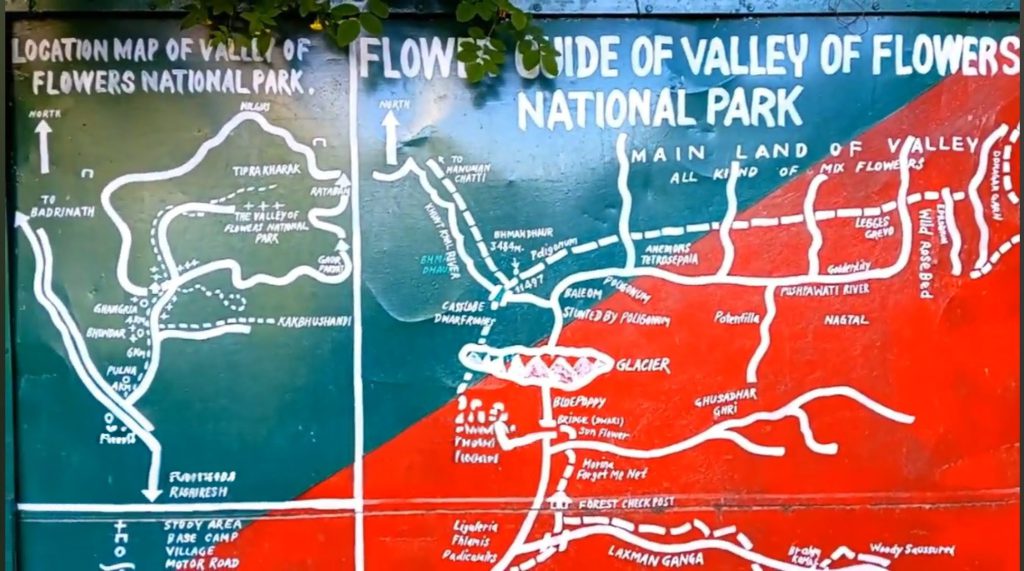
Trail Features & What to Expect Inside the Valley
| Feature | Details |
| Trail Type | Well-defined path, mostly flat inside the valley |
| Flora | 500+ species of alpine wildflowers |
| Water Crossings | Small stream crossings along the trail |
| Viewpoint | Panoramic views of Rataban, Gauri Parbat, and other peaks |
| Photography | Exceptional – carry a good camera/phone |
| Wildlife | Snow Leopard (rare), Bear, Himalayan Monal |
The trail gently ascends as you enter the valley, with the Pushpawati River flowing alongside. The deeper you walk into the valley, the more the floral carpet unfolds. On a clear day, the snow-capped peaks of Rataban (6,126 m) and Gauri Parbat (6,708 m) form a stunning backdrop to the sea of colours.
Stay Options in Ghangharia (Base for Valley of Flowers)
Since the valley must be visited as a day trip from Ghangharia, the stay options remain the same as listed in our Hemkund Sahib Yatra post:
- Government rest houses
- Private hotels and homestays
- Gurudwara Govind Dham – Free Langar (highly recommended)
- Camping tents (₹3,000–₹5,000/night)
Carry cash – There are no ATMs and mobile network connectivity is near zero in Ghangharia.
Essential Tips for Valley of Flowers Trek
| Category | Tip |
| Best Time | Mid-July to mid-August for maximum bloom |
| Start Time | Start by 7–8 AM to maximise time inside the valley |
| Footwear | Sturdy waterproof trekking shoes with grip (trails can be wet/muddy) |
| Rain Gear | Poncho or raincoat is a must – weather changes fast |
| Food | Carry packed snacks – no food stalls inside the valley |
| Water | Carry sufficient water; stream water can be purified |
| Camera | Don’t forget it – every turn is a postcard moment |
| Respect Nature | Do NOT pluck flowers; stay on marked trails only |
| Fitness | Easy-moderate; suitable even for children and senior trekkers |
Things to Carry
- Waterproof jacket/poncho – weather changes quickly and without warning
- Good trekking shoes with grip – trails can get slippery after rain
- Water bottle and light snacks – no stalls inside the park
- Cap and sunglasses – for the sunny stretches early in the day
- Walking stick – optional, but helpful on wet or uneven sections
- Camera – seriously, every turn is a postcard moment
Traxplorers’ Valley of Flowers Experience – June 2025
After the spiritually exhausting yet deeply fulfilling Hemkund Sahib Yatra on Day 2, we woke up refreshed (and a little sore!) in Ghangharia, ready for the Valley of Flowers on Day 3. The beauty of planning both treks together is that Ghangharia serves as the perfect common base and honestly, doing one without the other felt unthinkable once we were there.
We left our room at Ghangharia homestay early, had a warm breakfast and set off towards the Valley of Flowers trail by around 7:30 AM. The contrast from the previous day was immediate, instead of a steep pre-dawn climb in rain and mist, we were walking on a relatively easy, well-marked path with the Pushpawati River cheerfully accompanying us on one side.
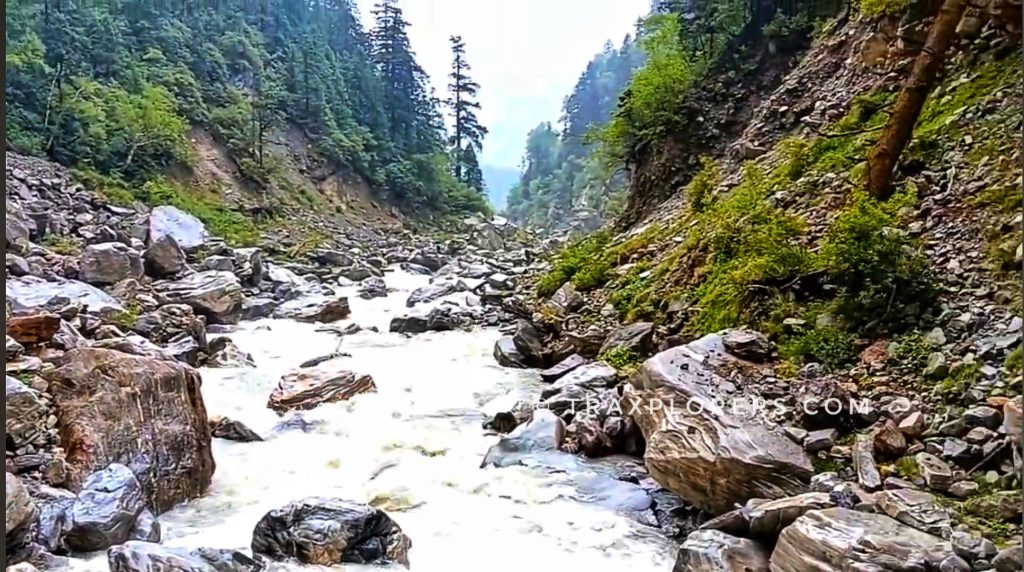
We reached the Forest Department Entry Gate, purchased our tickets (₹200 per person for Indians), and stepped inside. What greeted us was nothing short of surreal.
The valley was alive. After a gradual climb of about 3–4 km from the entry gate, the valley revealed itself completely an endless stretch of wildflowers in every colour, mountains towering on all sides, and waterfalls gushing down from great heights, their white ribbons of water cutting across the dark rock faces. It was quiet, with only the sound of the river, the distant falls, and the wind. After the chanting and crowds of Hemkund, the silence here felt like a gift.
Even though it was June and the bloom was just beginning, the valley was already breathtaking. We could only imagine the full glory of July and August, when the monsoon rains coax thousands of flowers into full bloom and the waterfalls roar with fresh, untamed energy. But even in this early, unhurried state, walking through it felt like moving through a living painting.
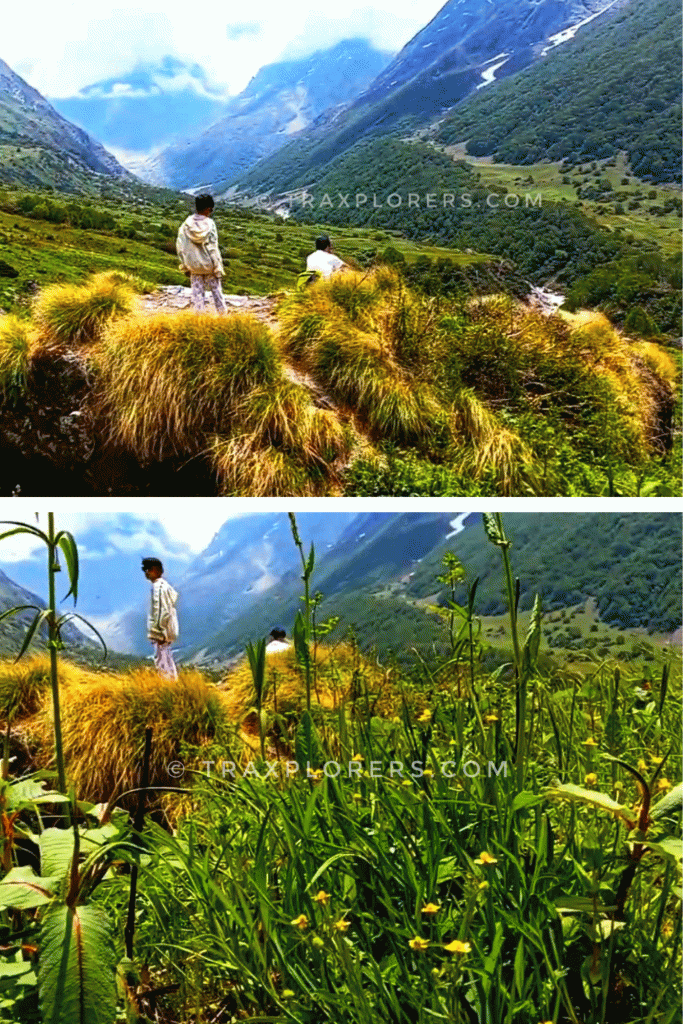
Tipra Valley – An Unexpected Awe
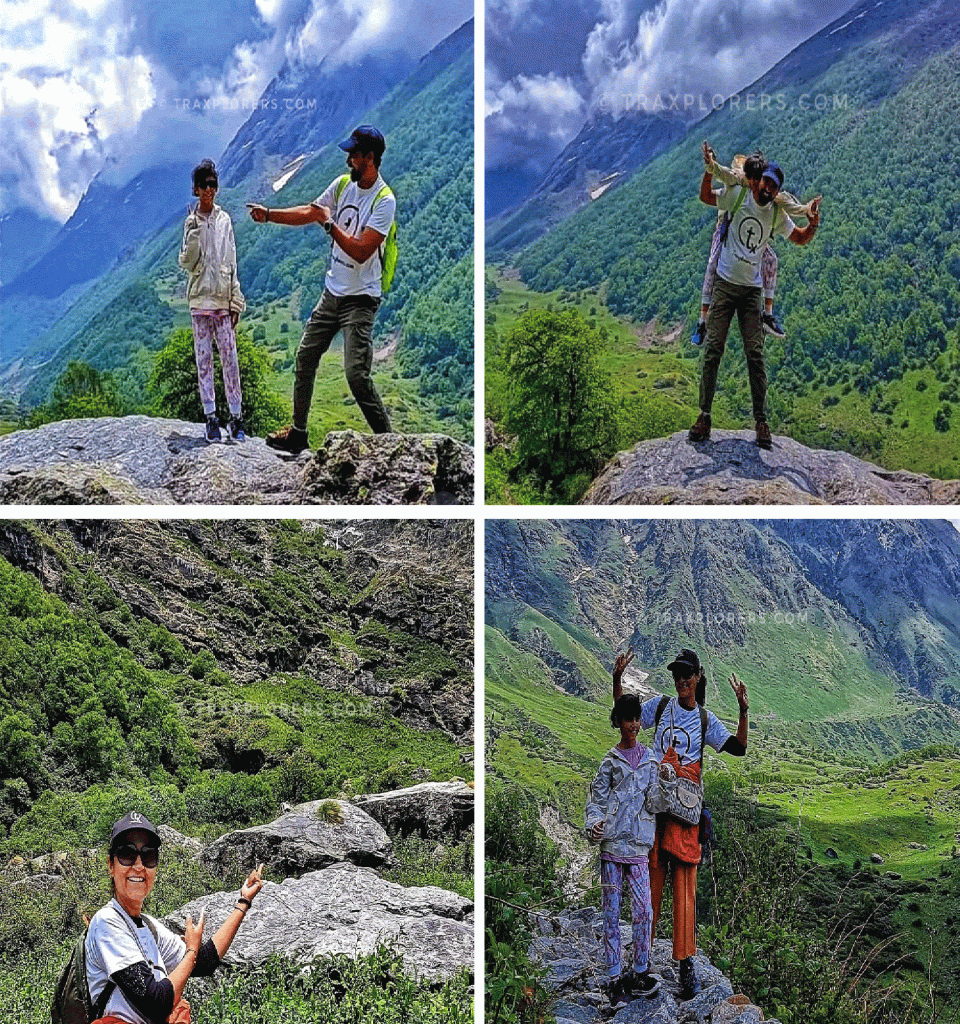
About midway along the trail, we reached a stunning viewpoint known as Tipra Valley. The views here opened up so suddenly and so dramatically that we all just stopped walking without a word, without a signal. Vast meadows stretched out before us, framed by towering peaks on all sides, with streams glistening under the morning sun like silver threads woven through the green. For a few quiet minutes, we simply stood there, soaking in the panorama. It felt like the mountains were offering us a prelude, a teaser of the beauty waiting ahead. If this was just the beginning, we couldn’t imagine what lay inside.
Encounter with Himalayan Birch (Bhoj Patra) Trees
Further along the trail, the path wound through patches of the legendary Himalayan Birch trees, locally known as Bhoj Patra. Their smooth, peeling white bark stood out almost mystically against the lush green surroundings, delicate and ancient at the same time. We had to stop and touch them.
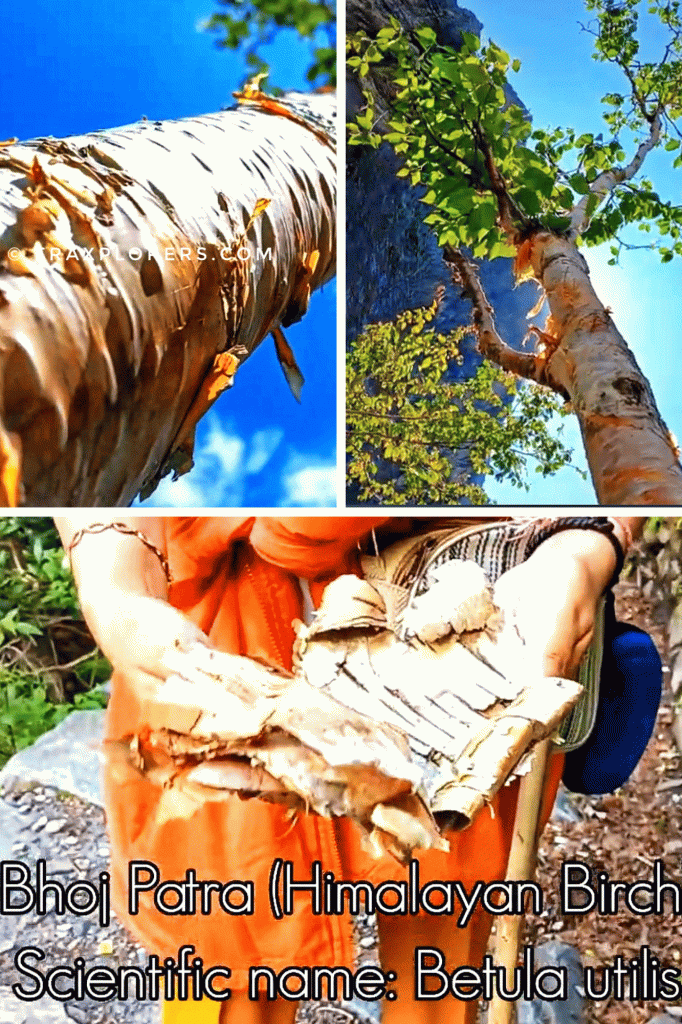
What makes Bhoj Patra truly special is its history. In ancient India, the bark of these trees was used as a writing material for sacred scriptures and manuscripts. In Hindu traditions, the leaves are still considered holy and used in certain rituals and offerings. Standing there among those quiet, silver-barked trees, surrounded by mountain silence, felt like stepping into a living piece of history. Our daughter was fascinated and honestly, so were we.
We wandered deeper into the valley for nearly 2.5 hours, stopping constantly to photograph and simply absorb the view. Our daughter was absolutely in awe. She kept running from flower patch to flower patch, naming them and asking questions that made us promise to return when she’s old enough to really remember every detail.
The weather remained kind for most of our time inside, partly cloudy, cool, and refreshing. As expected, clouds began gathering in the afternoon. We had started our return walk by around 1 PM, and that’s when the valley decided to give us one final, unforgettable parting gift.
What began as a light drizzle, barely noticeable at first, a few drops on our sleeves, slowly but surely grew into a gentle rain shower. We pulled out our ponchos and kept walking. And then we looked up.
The valley had transformed entirely.
The mountains that had been sharp and sun-lit all morning were now wrapped in slow-moving mist. Low clouds drifted between the peaks and descended into the valley, weaving through the wildflowers like a soft white veil. The colours which had already been breathtaking in the morning sun seemed to deepen in the rain. The pinks looked richer, the purples more vivid, the whites almost luminescent. Every flower was jewelled with raindrops, and the Pushpawati River roared a little louder beside us.
It was dramatically different from the valley we had entered in the morning. And somehow, even more beautiful.
We stood there for a few minutes. Rain tapping on our hoods, mist swirling around us, flowers nodding gently in the shower, we completely lost in it. Our daughter stretched her arms out and tilted her face up to the rain, grinning. No words were exchanged. None were needed.
If the Valley of Flowers in sunshine is a painting, in the rain it becomes a poem.
We eventually made our way back to Ghangharia, reaching by around 3 PM soaked in parts but completely full in every other sense. That rain wasn’t an inconvenience. It was the valley’s way of showing us another dimension of itself, one that most visitors in a hurry never get to witness.
If Hemkund Sahib moved our souls, Valley of Flowers especially in the rain, rested and renewed them.
Day Itinerary: Valley of Flowers (Day 3 of Our Trip)
| Time | Activity |
| 6:30 AM | Wake up, freshen up, breakfast |
| 7:30 AM | Start trek from Ghangharia towards Valley of Flowers |
| 9:00 AM | Reach Forest Department Entry Gate – buy tickets |
| 9:15 AM | Enter Valley of Flowers |
| 9:15 AM – 1:00 PM | Explore the valley, photography, rest by the river |
| 1:00 PM | Begin return trek |
| 3:00 PM | Back in Ghangharia |
| Next Day | Descend to Pulna → Govindghat, collect car, head home |
Combining Hemkund Sahib + Valley of Flowers: Our Recommendation
Both the treks share the same base (Ghangharia) and are best done together. Here’s the ideal 3-day plan from Govindghat:
- Day 1: Govindghat → Pulna (taxi) → Ghangharia (9 km trek) – Rest
- Day 2: Ghangharia → Hemkund Sahib → Return to Ghangharia
- Day 3: Ghangharia → Valley of Flowers (Day visit) → Return to Ghangharia / Descend
This combination gives you the best of both worlds, spiritual elevation on Day 2 and natural wonder on Day 3. Doing them on consecutive days is very manageable if you’re reasonably fit and pace yourself well.
Do’s and Don’ts for the Valley of Flowers Trek
✅ Do’s
- Start early to make the most of your time inside the valley
- Carry enough water and snacks — there are no stalls inside the park
- Wear comfortable trekking shoes with good grip
- Follow the marked trails to protect the fragile, delicate ecosystem
- Respect entry and exit timings for your own safety
- Hire a local guide if you’d like to learn about the flora and fauna. It truly enriches the experience
❌ Don’ts
- Do not pluck flowers or disturb wildlife. This is a strictly protected national park
- Avoid littering. Carry all your waste back to Ghangharia
- Don’t underestimate the weather. Always carry rain protection even on a sunny start
- Don’t try to stay inside the valley after closing hours
- Avoid loud noise. Let the sounds of the river, wind, and birdsong take over
Final Thoughts
The Valley of Flowers is the kind of place that redefines beauty. It doesn’t shout for your attention. It simply exists, quietly and magnificently, waiting for those willing to walk to its doorstep. Coming here right after Hemkund Sahib made the experience feel like a complete Himalayan journey with faith and nature, devotion and wonder, effort and reward, all woven together in just three days.
For our family, this was more than a trek. It was a reminder of why we travel, to witness the extraordinary, to challenge ourselves, and to create memories that we’ll carry long after our shoes have worn out.
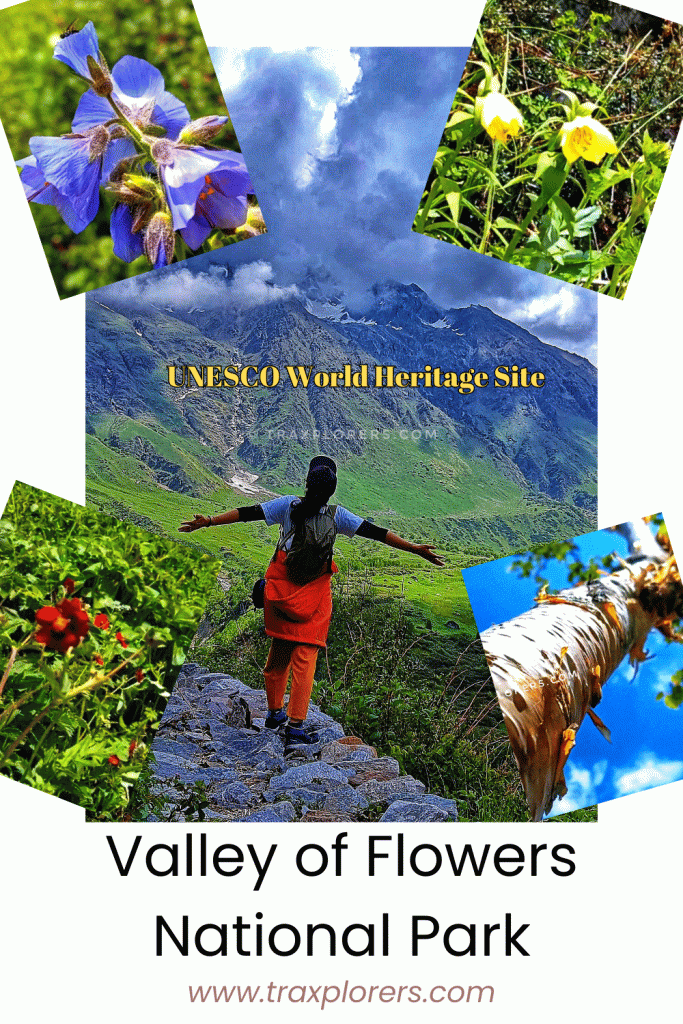
For Visual Treat: Valley of Flowers National Park
Also Read: Valley of flowers trek in peak monsoon season
More to visit in Uttarakhand: Rishikesh, Devprayag (Panchprayag), Badrinath, Kedarnath & Vasuki Tal Trek
Have you visited the Valley of Flowers? Or are you planning a combined Hemkund + Valley of Flowers trip? Drop your questions or experiences in the comments below! Share this post with fellow nature lovers. Pin the image below. Thanks!


Your blog is a constant source of inspiration for me. Your passion for your subject matter is palpable, and it’s clear that you pour your heart and soul into every post. Keep up the incredible work!
Its like you read my mind You appear to know a lot about this like you wrote the book in it or something I think that you could do with some pics to drive the message home a little bit but instead of that this is fantastic blog An excellent read I will certainly be back